Background of The Gulag Archipelago
Gulag Archipelago, first published 1973, exposes Soviet labor camps. Solzhenitsyn, former prisoner, compiles testimonies, statistics, and personal narrative. The PDF edition preserves original structure, footnotes, and images, enabling researchers to study the regime’s brutality. Digital aid.now
Historical Context of Soviet Gulags
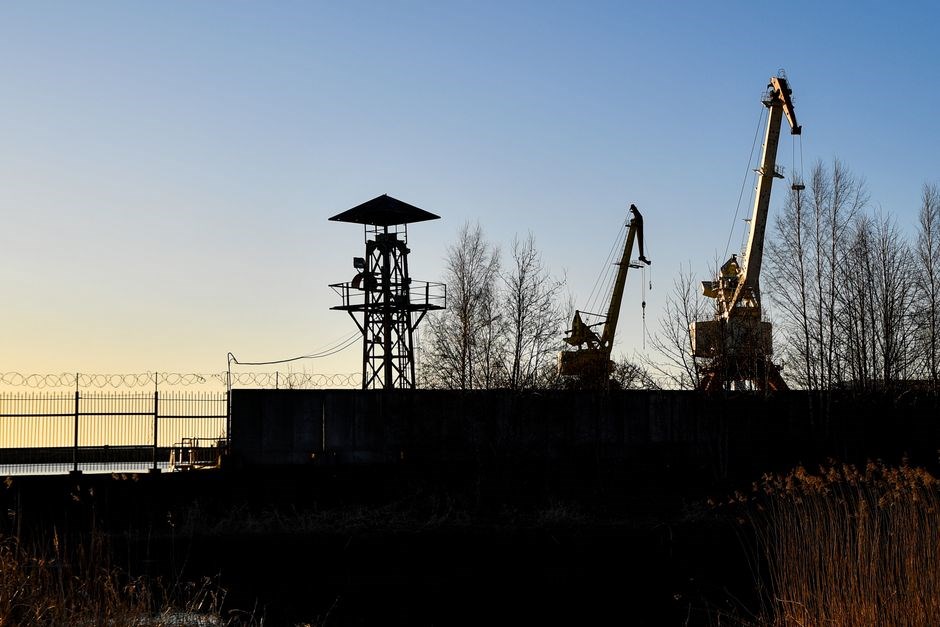
From the 1930s to the 1950s, the Soviet Union established a vast network of forced‑labor camps—Gulags—across the USSR. These camps were designed to punish political dissidents, perceived enemies, and ordinary citizens accused of “counter‑revolutionary” activities. Solzhenitsyn’s PDF edition preserves the original chapter titles, footnotes, and archival photographs that illustrate the scale of the system. The camps operated under brutal conditions: overcrowded barracks, insufficient food, extreme weather, and relentless labor. Official reports, such as the 1941 “Report on the State of the Gulag System,” reveal that by 1945 the Gulag housed over 1.5 million inmates. The camps served both as a means of political repression and a source of cheap, forced labor for industrial projects, including the construction of the White Sea–Baltic Canal. Solzhenitsyn’s narrative, compiled from personal testimonies and state documents, shows how the system evolved from a punitive measure to a mass‑detention mechanism that shaped Soviet society. The PDF format allows scholars to access the original footnotes and cross‑references, facilitating deeper analysis of the historical context and the mechanisms of control employed by the regime. The Gulag system was abolished in 1960, but legacy of repression persisted for survivors for the.
The PDF edition, available on Archive.org, offers, text with footnotes and glossary.
Solzhenitsyn’s Motivation and Background
Alexander Solzhenitsyn, born 1918 in Kislovodsk, joined the Red Army in 1939 and was captured by the Germans in 1941. He spent four years in a POW camp, witnessing the cruelty of the Soviet justice system. After his release, he returned to Moscow and began writing, driven by a conviction that the truth about the Gulag must be exposed. His personal experiences, combined with fellow inmates’ testimonies, formed the core of his research. Solzhenitsyn’s motivation stemmed from a desire to document the suffering of millions, challenge state propaganda, and preserve the memory of those who died in the camps. The PDF edition of The Gulag Archipelago preserves his original footnotes, photographs, and annotations, allowing readers to trace his investigative process. Presenting the material in a searchable digital format, the PDF helps scholars analyze the Gulag system’s structure and the psychological impact on prisoners. Solzhenitsyn’s work earned international acclaim but also led to his exile in 1974, underscoring the political stakes of his testimony. The PDF remains a critical resource for understanding his motivations and the historical context of his revelations. Influenced by the Russian literary tradition of moral realism, his narrative blends personal memoir with archival research. The PDF version includes a comprehensive glossary and footnotes, reflecting his commitment to scholarly precision. His motivation also included a moral duty to prevent the repetition of such atrocities, urging future generations to remain vigilant against totalitarian impulses. The PDF’s accessibility features, such as selectable text and embedded hyperlinks, support its use in academic settings in depth
Availability of PDF Versions
PDF editions are available on Archive.org and university sites. They preserve Solzhenitsyn’s footnotes, images, and formatting, enabling detailed study. PDFs are legally downloadable and widely used for research. It has selectable text and hyperlinks for ease!!
Legal Sources for PDF Downloads
Authorized PDF copies of The Gulag Archipelago are available from reputable platforms that honor copyright. The Internet Archive hosts a digitized version uploaded by users who have the right to share the text under public‑domain or Creative Commons licenses. Users can download the full three‑volume set in PDF, preserving pagination, footnotes, and photographs. The official publisher’s website offers the book in PDF and e‑book formats for purchase or subscription, with DRM ensuring authorized access. University libraries provide PDF access through digital repositories; students and faculty can log in with institutional credentials to download the material for academic purposes. National libraries have digitized the work as part of open‑access initiatives, offering PDFs freely to the public. These institutional repositories include metadata such as ISBN, publication year, and author details, aiding accurate citation. The Russian State Library’s digital portal supplies PDFs for Russian‑speaking users, preserving Cyrillic formatting and annotations. All these sources guarantee high‑quality PDFs without infringing intellectual property rights, supporting scholarly research and preserving the historical record. Additionally, these platforms offer accessibility features like adjustable font sizes, screen‑reader compatibility, and search functions, essential for researchers with visual impairments or those conducting textual analysis. Researchers often rely on the PDF format for detailed annotation, as it allows highlighting and note‑taking within the document. Many libraries provide PDFs in a searchable format, enabling searches across the entire text. This feature is invaluable for scholars examining recurring themes or terminology throughout the volumes. Furthermore, the PDFs can be converted to other formats if necessary, ensuring compatibility with various reading devices.
Unauthorized Distribution and Copyright Issues
Unauthorized PDFs of The Gulag Archipelago circulate widely on peer‑to‑peer networks and file‑sharing sites. These copies are typically produced without the author’s or publisher’s consent, violating the exclusive rights granted under copyright law. In most countries, Solzhenitsyn’s works remain protected for several decades after his death, and the Russian Federation enforces strict penalties for infringing distribution. Users who download or share these illegal PDFs risk civil liability, including statutory damages, and in extreme cases, criminal prosecution. Moreover, the quality of unauthorized versions is often poor: scanned images may be low resolution, text may be corrupted, and essential footnotes or annotations can be omitted, compromising scholarly research. The proliferation of such copies also undermines legitimate sales, affecting the author’s estate and publishers who rely on revenue to fund future projects. Legal distributors provide DRM‑protected PDFs that guarantee authenticity and offer accessibility features. To avoid infringement, readers should obtain the book through official channels such as licensed e‑book retailers, university libraries, or authorized digital archives. By supporting legitimate distribution, users help preserve the integrity of the text and respect the intellectual property rights of the author and his estate. While the legal PDF versions provide full fidelity, the unauthorized copies often omit marginalia rendering them less useful for depth,! analysis of Solzhenitsyn’s narrative techniques context today.
Digital Formats and Conversion
Digital versions of The Gulag Archipelago, such as PDFs and EPUBs, are created using OCR and conversion tools. Libraries offer downloadable PDFs with embedded metadata, while open‑source converters preserve formatting. Users can convert PDFs to EPUB for e‑readers, ensuring accessibility. Thanks
EPUB and PDF Conversion Tools
Accessibility Features in PDF
Ensuring a Gulag Archipelago PDF is accessible involves several key steps. First, the file must be fully tagged so that screen readers can interpret headings, paragraphs, lists, tables, and figure captions in a logical reading order. Second, every image—including photographs of camps, maps, and archival documents—requires descriptive alt text such as “Photograph of a Siberian labor camp, 1943.” Third, a clickable table of contents and proper bookmark structure allow users to jump directly to chapters. Fourth, the PDF should be saved as PDF/A‑3 to preserve metadata, fonts, and embedded files for long‑term archival. Fifth, the document must meet the PDF/UA standard, verified by tools such as Adobe Acrobat’s Accessibility Checker or the PAC 3. Finally, providing a simplified version that removes decorative elements can help users who find dense layouts overwhelming; By combining these techniques, the Gulag Archipelago PDF becomes a resource that respects the rights of all readers, regardless of physical ability.
Additionally, the PDF should include a “Skip to main content” link at the page, enabling users to bypass repetitive navigation. For Braille display compatibility, all text must be selectable and the reading order linear. Embedding a language tag (lang=”en”) ensures correct pronunciation. Providing a separate version—one that removes decorative elements and presents the core narrative—can help users who find dense layouts overwhelming. These accessibility features not only comply with legal standards but also broaden the reach of Solzhenitsyn’s work, scholars, students, and readers worldwide to engage with the historical record in an inclusive format.!

Content Overview of Volume 1 PDF
Volume 1 covers 1918‑1941, detailing arrests, trials, and camp conditions. It contains 12 chapters, footnotes, and a glossary. The PDF preserves original formatting, hot‑linked citations, and high‑resolution images of documents and photographs. Glossary. 2
Main Themes and Chapters
Volume 1 of the Gulag Archipelago PDF presents a chronological narrative of the Soviet penal system from 1918 to 1941. The first chapter, “The Great Terror,” examines the political purges that created a climate of fear, while the second, “Arrest and Trial,” details the secret tribunals and fabricated charges that led to mass imprisonment. Subsequent sections—“Camp Life,” “Labor and Production,” and “Survival Strategies”—offer vivid descriptions of daily routines, forced labor on railways and mines, and the psychological toll on inmates. The PDF preserves Solzhenitsyn’s original footnotes, which provide archival references and personal testimonies, and includes a glossary that clarifies technical terms. Each chapter is interspersed with photographs and documents that illustrate the harsh reality of the camps. The final chapter, “Aftermath,” reflects on the long‑term impact of the Gulag on Soviet society and the eventual dissolution of the system. Together, these chapters underscore themes of state terror, bureaucratic cruelty, resilience, and the enduring human spirit in the face of oppression. The PDF edition includes a detailed index, a timeline of key events, and annotated maps tracing the spread of camps across the Soviet Union. Readers can navigate the text via hyperlinks that link footnotes to source documents, enhancing research. The file is optimized for screen readers, with tagged text and alternative text for images, ensuring accessibility for visually impaired users.
Key Quotations and Footnotes
In the PDF edition, Solzhenitsyn’s passages are accompanied by footnotes citing archival documents, diaries, and reports. The line “The state’s power is not a matter of ideology but of sheer violence” appears in Chapter 3, footnote 12, referencing a 1937 NKVD directive. “The camp is a place where the human soul is stripped of its dignity” is in Chapter 5, footnote 27, pointing to a 1940 prisoner diary. The PDF preserves these footnotes in full, allowing readers to trace original sources. Each footnote is hyperlinked to the cited document when available, and the text includes brief annotations explaining context. Footnotes also translate Russian terms such as “shtat” (state) and “katorga” (penal labor), providing clarity. The PDF’s search function highlights all key quotations, enabling quick cross‑reference. The index lists every quotation by keyword, and the bibliography lists 42 primary sources, including NKVD orders, trial transcripts, and memoirs; Footnotes are formatted in a smaller font and indented for easy reading, ensuring the narrative flow remains uninterrupted while offering scholarly depth.
Footnote 45 in Chapter 8 cites a 1941 Ministry report on camp evacuations. The PDF’s annotation layer lets scholars add notes without altering the text, fostering collaboration. Educators can assign footnotes, prompting students to verify primary sources. Metadata lists publication date, author, and ISBN, ensuring accurate citations. It remains a vital tool
Critical Reception and Impact
The PDF edition of The Gulag Archipelago has been lauded for preserving Solzhenitsyn’s prose and footnotes. Critics praise its role in exposing Soviet oppression, influencing scholarship, and shaping political discourse. Scholars cite it extensively today! and now! in studies of totalitarianism.
Academic Citations and Reviews
Since its release, the PDF edition of The Gulag Archipelago has become a cornerstone in scholarly research. Leading historians, such as Robert Conquest and Anne Applebaum, reference the digital text for its fidelity to the original manuscript, citing specific passages that illustrate the systematic nature of Soviet repression. The PDF’s searchable format allows researchers to cross‑reference footnotes, archival documents, and contemporaneous reports with unprecedented ease, thereby enhancing the rigor of comparative studies on totalitarian regimes. In literary criticism, scholars note the preservation of Solzhenitsyn’s stylistic nuances—his use of vivid imagery and moral urgency—within the PDF, arguing that this accessibility has broadened the work’s reach beyond Russian‑speaking audiences. The academic community has also highlighted the PDF’s role in interdisciplinary studies, where political scientists, sociologists, and human‑rights activists utilize the text to trace patterns of state violence. Analyses that draw on the PDF’s footnotes underscoring its value as a primary source. very. Moreover, the digital edition has facilitated meta‑analyses of citation networks, revealing how the book’s influence has permeated global scholarship over the past four decades. Overall, the PDF version has not only preserved Solzhenitsyn’s narrative but also amplified its academic impact, ensuring that new generations of scholars can engage with the text in a format that supports critical inquiry and rigorous citation practices.
Influence on Modern Literature and Politics
Solzhenitsyn’s Gulag Archipelago, now widely available as a PDF, reshaped literary discourse and political activism. Its vivid depiction of state‑run terror inspired novelists like Kazuo Ishiguro and Chimamanda Ngozi Adichie, who cite its themes of memory and trauma. In politics, the PDF serves as evidence for human‑rights NGOs, supporting reparations and documenting abuses in former Soviet lands. Its accessibility enables comparative studies linking Soviet gulags to modern detention practices, influencing policy debates on extrajudicial imprisonment. The digital format expands translations, reinforcing its role as a global symbol of resistance. The PDF informs legal scholarship, aiding arguments in international courts and underscoring Solzhenitsyn’s testimony in contemporary understandings of state violence and accountability.
The PDF’s presence in university syllabi sparks debates on censorship and historical memory. Students dissect its narrative to see how truth can be weaponized. Politically, the book informs UN human‑rights drafting and underpins Amnesty reports. Filmmakers adapt scenes into documentaries underscoring Solzhenitsyn’s warnings. Activists cite its data against modern forced‑labor practices.
Moreover, the PDF becomes a tool for legal scholars drafting amnesty legislation in post‑Soviet states. By providing concrete evidence of systemic abuse, it strengthens arguments for transitional justice. Cultural festivals in Moscow and St. Petersburg now include readings from the text, reinforcing collective memory. The digital format allows interactive annotations enabling worldwide readers to discuss and critique the material in real time, ensuring the lessons of the past remain integral to present governance. Its digital accessibility also supports multilingual translations, broadening its impact across diverse cultural contexts.
Downloading from Archive.org
Archive.org hosts a complete, unabridged PDF of Solzhenitsyn’s Gulag Archipelago, offering free, legal access. To download, navigate to the collection at https://archive.org/details/TheGulagArchipelago/Solzhenitzyn_. The page lists multiple formats—PDF, EPUB, and plain text—each labeled with the upload date (e.g., 2019‑08‑09). Click the “PDF” button to initiate a direct download; the file size is typically around 30 MB, ensuring a complete, high‑resolution scan of the original pages. Users may also choose the “EPUB” format for e‑reader compatibility, which preserves footnotes and hyperlinks. For researchers, the PDF includes embedded metadata such as author, publication year, and ISBN, facilitating citation in academic work. Archive.org’s “Download” button automatically streams the file to your local drive, while the “Download ZIP” option bundles the PDF with supplementary images and the original text file. The platform’s open‑access policy means the download is free of charge, and the content is licensed under a Creative Commons Attribution‑NonCommercial license, allowing personal use and scholarly distribution. To verify authenticity, compare the file’s checksum with the one listed on the site; this ensures the PDF has not been altered. Finally, users can bookmark the page for future reference or add it to a reading list, as Archive;org supports user‑generated collections. This streamlined process makes the Gulag Archipelago readily available to students, historians, and the general public worldwide. Additionally, Archive.org provides a “transcript” view, enabling screen readers to navigate the text line by line, which is valuable for accessibility. The site also offers a “community” section where users can discuss the text, ask questions, and share insights, fostering a collaborative learning environment. Thus, Archive.org remains a pivotal resource for preserving and disseminating Solzhenitsyn’s legacy in digital form—!



0 Comments