Moon Guide: Red Moon ─ A Comprehensive Overview (September 7, 2026)
Prepare for a celestial spectacle! On September 7, 2026, Earth’s shadow will grace the Moon, painting it a stunning copper-red hue – a truly breathtaking event;
What is a Red Moon?
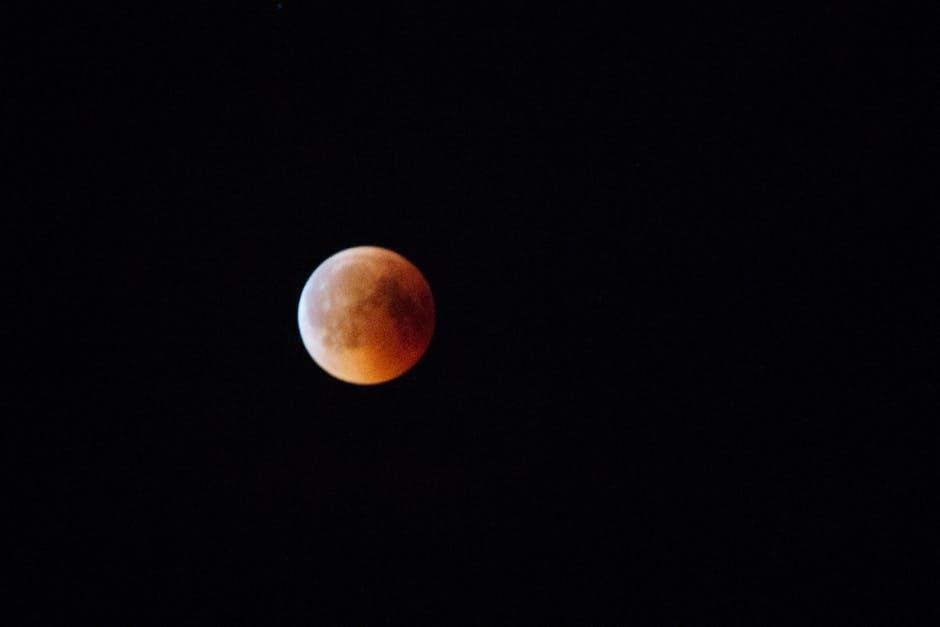
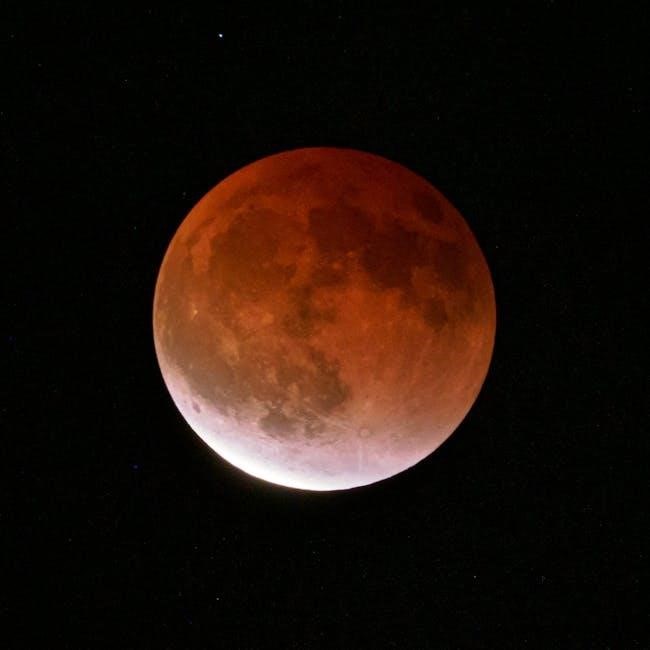
A “Red Moon,” often captivating skywatchers, isn’t a change in the Moon itself, but rather an optical illusion created during a total lunar eclipse. As the Moon fully enters Earth’s umbra – its darkest shadow – it doesn’t vanish. Instead, it transforms, taking on a reddish or coppery glow.
This remarkable phenomenon occurs because of the way Earth’s atmosphere filters sunlight. Red wavelengths of light are bent, or refracted, around Earth and onto the Moon’s surface. Essentially, all the sunsets and sunrises happening around the world simultaneously are projected onto the lunar disk, resulting in that beautiful, reddish coloration. The intensity of the red hue can vary depending on atmospheric conditions.
The Science Behind the Red Hue
The captivating red color observed during a lunar eclipse isn’t due to the Moon emitting red light, but rather Earth acting as a lens. Sunlight, composed of all colors, is scattered by our atmosphere. Shorter wavelengths – blues and violets – are scattered away more easily, which is why our sky appears blue.
However, longer wavelengths, like reds and oranges, are less affected by this scattering and can bend, or refract, around Earth. During a total lunar eclipse, this refracted sunlight reaches the Moon, giving it a reddish tint. The amount of dust and clouds in Earth’s atmosphere significantly impacts the shade of red; more particles lead to a deeper, richer color.
Lunar Eclipses and the Red Moon Phenomenon
A lunar eclipse occurs when the Earth passes directly between the Sun and the Moon, casting a shadow upon the lunar surface. This can only happen during a full moon phase. The “Red Moon” phenomenon specifically refers to total lunar eclipses where the Moon doesn’t disappear entirely, but instead takes on a reddish hue – often called a “blood moon.”
This isn’t a frequent occurrence, as precise alignment is needed. The intensity of the red color varies depending on atmospheric conditions. A clear atmosphere results in a brighter red, while a dusty or cloudy one can create a darker, more muted tone. Observing a Red Moon is a safe and spectacular astronomical event, unlike solar eclipses.
Why September 7, 2026? Specific Eclipse Details
September 7, 2026, is poised to deliver a particularly stunning total lunar eclipse, visible from a wide swath of the globe. The alignment of the Sun, Earth, and Moon on this date will be nearly perfect, ensuring the Moon passes completely within Earth’s umbra – the darkest part of the shadow.
Preliminary calculations indicate the eclipse will begin in the late evening hours for many observers, peaking around midnight local time. The total phase, when the Moon appears red, is expected to last for over an hour, providing ample opportunity for viewing and photography. This eclipse is notable for its anticipated brightness and color intensity.
Types of Lunar Eclipses
Lunar eclipses manifest in three forms: total, partial, and penumbral, each offering a unique visual experience as Earth interacts with sunlight and the Moon.
Total Lunar Eclipse
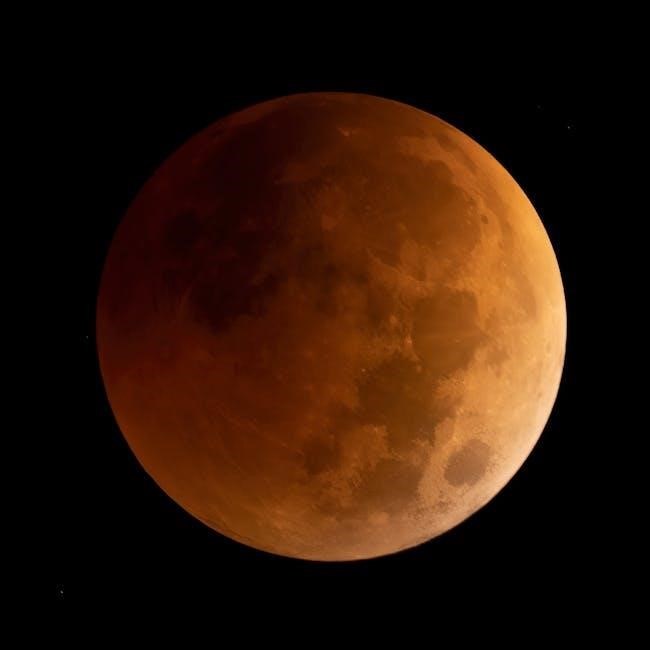
A total lunar eclipse occurs when the entire Moon passes into Earth’s umbra – the darkest part of our planet’s shadow. This results in the Moon appearing dramatically darkened, but rarely completely black. Instead, it often takes on a reddish or copper hue, earning it the nickname “Blood Moon.”
The reddish coloration isn’t due to the Moon itself changing, but rather the result of sunlight being refracted (bent) and filtered through Earth’s atmosphere. Shorter wavelengths of light, like blue and violet, are scattered away, while longer wavelengths, like red and orange, are bent towards the Moon. This is the same reason sunsets appear red!
During totality, the Moon can exhibit varying shades of red, depending on the amount of dust and clouds in Earth’s atmosphere at the time. A clearer atmosphere leads to a brighter, more vibrant red color.
Partial Lunar Eclipse
A partial lunar eclipse happens when only a portion of the Moon passes through Earth’s umbral shadow. Unlike a total eclipse, the Moon doesn’t transform into a fully red orb. Instead, observers will witness a dark shadow gradually covering a part of the lunar surface.
The shadowed area will appear noticeably darker than the rest of the Moon, creating a striking contrast. The shape of the shadow is always circular, demonstrating Earth’s roundness. As the eclipse progresses, the amount of the Moon covered by the shadow changes, reaching a maximum point before slowly receding.
Even during a partial eclipse, the portion of the Moon within the umbra can exhibit a reddish tinge, though it will be less pronounced than in a total eclipse. The experience is still a beautiful and captivating celestial event!
Penumbral Lunar Eclipse
A penumbral lunar eclipse is the most subtle type, occurring when the Moon passes through Earth’s faint penumbral shadow. This shadow is much lighter than the umbral shadow, making the eclipse difficult to notice for the casual observer.
During a penumbral eclipse, the Moon doesn’t darken significantly; instead, it may appear slightly dimmed or shaded. The effect is often described as a subtle dusky coloring across the lunar surface. Many people don’t even realize a penumbral eclipse is happening without careful observation.
Because the shading is so slight, optimal viewing conditions and a keen eye are needed to detect a penumbral lunar eclipse. It’s a gentle, understated celestial event, offering a subtle reminder of the Moon’s orbital dance with Earth.
The Sturgeon Moon & Other Names
September’s full Moon carries rich traditions! Known as the Sturgeon Moon, Green Corn Moon, Grain Moon, and Red Moon, each name reflects seasonal practices.
Sturgeon Moon Origins
The name “Sturgeon Moon” originates from North American fishing practices. Indigenous peoples observed that September consistently brought plentiful sturgeon harvests in the Great Lakes and other major bodies of water. This was a crucial time to gather and preserve this important food source before winter arrived.
Historically, sturgeon were vital for sustenance, providing a significant protein source for many tribes. Their large size and abundance during this period led to the Moon being directly associated with these fish. The naming convention reflects a deep connection to the natural world and the rhythms of seasonal availability. It’s a beautiful example of how lunar cycles were intertwined with daily life and survival.
Green Corn Moon Significance
Alongside the Sturgeon Moon, September’s full moon is also widely known as the Green Corn Moon, particularly amongst Native American cultures. This name signifies the time of year when corn reaches maturity and is ready for harvesting. It represents a period of abundance and gratitude for the successful cultivation of this essential crop.
Ceremonies and festivals often accompanied the Green Corn Moon, celebrating the harvest and giving thanks for the sustenance it provided. These events were deeply spiritual, involving rituals to ensure continued fertility of the land and a bountiful harvest in the future. The Green Corn Moon embodies themes of nourishment, growth, and community, reflecting a harmonious relationship with nature’s cycles.
Grain Moon Associations
Similar to the Green Corn Moon, the name Grain Moon highlights the agricultural significance of September’s full moon. Historically, this lunar phase coincided with the period of harvesting grains like wheat, barley, and oats – crucial staples for communities worldwide. It symbolized the culmination of months of labor and preparation, offering a sense of accomplishment and security as winter approached.
The Grain Moon’s association with abundance extends beyond mere sustenance. It represents the fruits of one’s efforts, the rewards of dedication, and the importance of providing for the future. Traditions often involved celebrating the harvest with feasts and communal gatherings, strengthening bonds and expressing gratitude for the earth’s generosity. It’s a time to reflect on growth and prepare for rest.
Red Moon Symbolism Across Cultures
Throughout history, a red-hued moon has evoked powerful and often contrasting symbolism across diverse cultures. In some traditions, the crimson color represented bad omens, foretelling conflict, disaster, or the wrath of deities. Ancient civilizations might have interpreted it as a sign of disruption in the cosmic order, demanding appeasement through rituals.
Conversely, other cultures viewed the Red Moon as a potent symbol of transformation, rebirth, and heightened spiritual energy. The color red itself is often associated with passion, courage, and life force. For some Indigenous groups, it signified a time of powerful dreams, prophetic visions, and connection to ancestral spirits. It was a period for introspection and acknowledging the cyclical nature of existence, embracing change and renewal.
Observing the Red Moon Safely
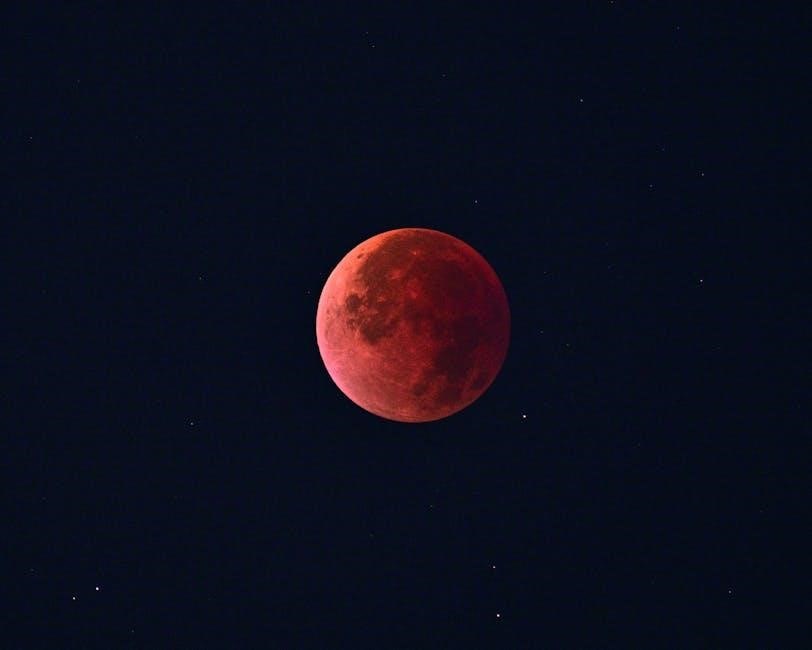
Enjoy the spectacle! Viewing a lunar eclipse is completely safe; special eye protection isn’t needed, unlike observing the Sun directly.
Eye Safety During a Lunar Eclipse
Unlike solar eclipses, observing a lunar eclipse poses absolutely no risk to your eyesight. You can view the Moon directly with your naked eyes, binoculars, or a telescope without any special filters or protective eyewear. The Moon simply isn’t emitting harmful radiation during this event; it’s reflecting sunlight.
This is a significant difference from viewing the Sun, which can cause severe and permanent eye damage without proper protection. Feel free to share the experience with family and friends, and enjoy the beautiful reddish hue without any worry about eye strain or potential harm. It’s a truly safe and accessible astronomical event for everyone!
Best Viewing Locations (September 7, 2026)
For optimal viewing of the September 7, 2026, Red Moon, locations with clear, dark skies are paramount. North and Central America will have prime viewing opportunities, as the eclipse will be fully visible across these regions. Rural areas, away from significant light pollution from cities, are highly recommended.
Consider heading to national parks, open fields, or elevated locations like hills or mountains. Checking a dark sky map beforehand can help pinpoint areas with minimal light interference. Coastal regions may also offer stunning views, with the red Moon reflecting on the water. Remember to scout your location in advance to ensure a clear horizon!
Equipment for Optimal Viewing
While the Red Moon is visible to the naked eye, certain equipment can significantly enhance your viewing experience. Binoculars are an excellent starting point, providing a closer and more detailed look at the lunar surface and the subtle color variations during the eclipse.
For more dedicated observers, a telescope is ideal. Even a small telescope will reveal incredible detail. Red filters can also enhance contrast and bring out the reddish hue. Don’t forget comfortable seating, warm clothing (as evenings can be cool), and a red-light flashlight to preserve your night vision. A camera with a tripod allows you to capture stunning images of this celestial event!
Astrological Significance of the Red Moon
Astrologically, the Red Moon amplifies emotions and intuition, urging introspection and release. It’s a potent time for transformation and spiritual connection.
Red Moon in Different Zodiac Signs
The Red Moon’s influence shifts depending on the zodiac sign it occupies during the September 7, 2026 eclipse. In Aries, expect heightened impulsivity and courageous action. Taurus individuals may focus on security and material comforts, while Geminis experience amplified communication and mental activity.
For Cancer, emotional sensitivity is paramount; Leos radiate confidence and creativity. Virgos turn inward for self-assessment, and Libras seek balance in relationships. Scorpios delve into deep emotional currents, while Sagittarius embraces adventure and philosophical exploration.
Capricorns focus on responsibility and long-term goals, Aquarius champions innovation and social justice, and Pisces experiences heightened intuition and spiritual awareness. Each sign will uniquely interpret and experience the Red Moon’s potent energy.
Impact on Emotions and Intuition
The Red Moon of September 7, 2026, is anticipated to amplify emotional intensity and heighten intuitive abilities. This lunar eclipse often stirs up subconscious feelings, bringing unresolved issues to the surface for processing. Expect increased sensitivity, vivid dreams, and a stronger connection to your inner voice.
Many individuals may experience a surge in empathy, making it easier to understand and connect with others on a deeper level. However, this heightened emotional state can also lead to increased vulnerability and reactivity. It’s crucial to practice self-care and grounding techniques during this time.
Trust your instincts and pay attention to subtle cues. The Red Moon encourages introspection and provides an opportunity for profound emotional healing and spiritual growth, fostering a deeper understanding of oneself.
Rituals and Practices for the Red Moon
Embrace the potent energy of the September 7, 2026 Red Moon through intentional rituals. Journaling is excellent for releasing emotions and gaining clarity. Create a sacred space with candles, crystals (especially garnet or ruby), and calming music to facilitate introspection.
Consider a releasing ceremony, writing down what no longer serves you and safely burning the paper, symbolizing transformation. Meditation focused on emotional healing and self-love is highly beneficial. Spend time in nature, grounding yourself and connecting with Earth’s energy.
Alternatively, engage in creative expression – painting, dancing, or writing – to channel the heightened emotional energy. Prioritize self-care and allow yourself to rest and recharge during this powerful lunar event, fostering inner peace.
Historical Accounts of Red Moons
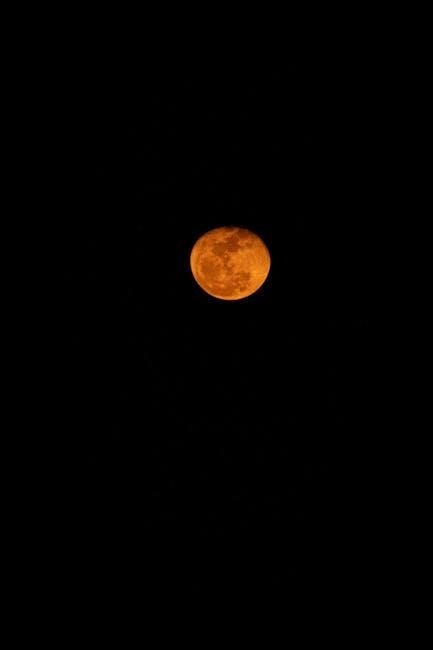
Throughout history, red moons have inspired awe and apprehension, appearing in ancient texts as omens, often linked to significant societal shifts and dramatic events.
Red Moon Mentions in Ancient Texts
Ancient civilizations frequently documented unusual celestial events, and the red moon was no exception. Babylonian records, dating back millennia, describe reddish lunar appearances often interpreted as warnings from the gods, foreshadowing potential calamities or shifts in power. Similarly, in ancient China, a red moon was considered a bad omen, frequently associated with the emperor’s fate or impending political unrest.
Greek and Roman historians also noted these occurrences, though their interpretations varied, sometimes linking them to volcanic eruptions or atmospheric disturbances. The Hebrew Bible contains references to a blood-red moon, often viewed as a sign of divine wrath or impending judgment. These early observations demonstrate a consistent human fascination – and often fear – surrounding the phenomenon, embedding the red moon deeply within cultural narratives and belief systems.
Cultural Interpretations Throughout History
Throughout history, the red moon has evoked diverse cultural interpretations, often reflecting societal anxieties and belief systems. In Mesoamerican cultures, like the Maya and Aztec, a red moon signified disruption and potential warfare, demanding ritualistic appeasement of the gods. Indigenous North American tribes, particularly those observing the Sturgeon Moon, connected the red hue to the peak of the sturgeon harvest, a time of abundance but also requiring respect for nature’s cycles.
European folklore often associated the red moon with werewolves and other mythical creatures, fueling superstitions and cautionary tales. Medieval Christian interpretations sometimes viewed it as a premonition of plague or famine. These varied responses demonstrate how the red moon served as a canvas for projecting collective fears, hopes, and spiritual understandings across different cultures and eras.
Red Moon Folklore and Superstitions
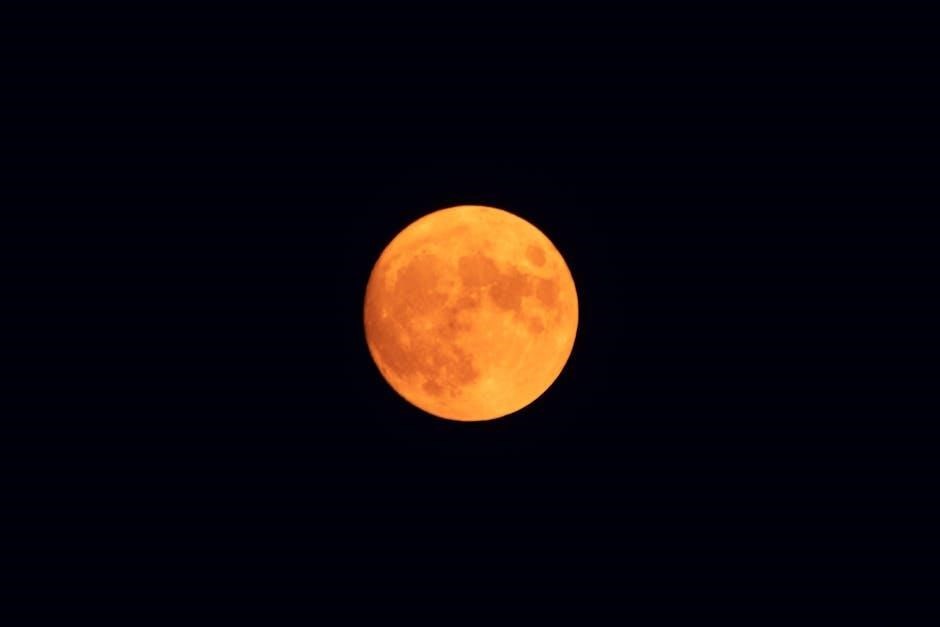
Ancient myths and legends often surround the red moon, with tales of misfortune and warnings against gazing upwards – beliefs persisting even today.
Common Myths and Legends
Throughout history, the appearance of a red moon has sparked numerous myths and legends across diverse cultures. Many traditions associate the crimson hue with omens, often foretelling periods of upheaval, disaster, or significant change. Some folklore suggests the red moon signifies the anger of deities, while others believe it represents a bleeding wound in the sky, a celestial sign of conflict or sorrow.
In certain cultures, it was thought that the red moon possessed the power to transform individuals, either physically or spiritually. Stories abound of werewolves and other mythical creatures being influenced by the lunar glow. Conversely, some believed the red moon held protective qualities, warding off evil spirits and ensuring a bountiful harvest. These narratives demonstrate humanity’s enduring fascination with, and often fearful respect for, this striking astronomical event.
“Do Not Look Up” – Debunking the Myth
A persistent, yet entirely unfounded, myth surrounds red moons: the warning “Do Not Look Up!” This stems from a misunderstanding of lunar eclipses and a conflation with solar eclipses, which do require eye protection. Unlike staring directly at the sun, observing a red moon poses absolutely no risk to your vision. The red hue is simply sunlight filtered through Earth’s atmosphere, a beautiful and harmless phenomenon.
The origin of this myth is unclear, possibly fueled by sensationalism or misinterpretations of ancient folklore. Rest assured, you can safely gaze upon the red moon with the naked eye, binoculars, or a telescope without fear of damage. Enjoy the spectacle! There’s no need to heed the false warning – look up and marvel at the celestial display.
The Red Moon and its Connection to Earth
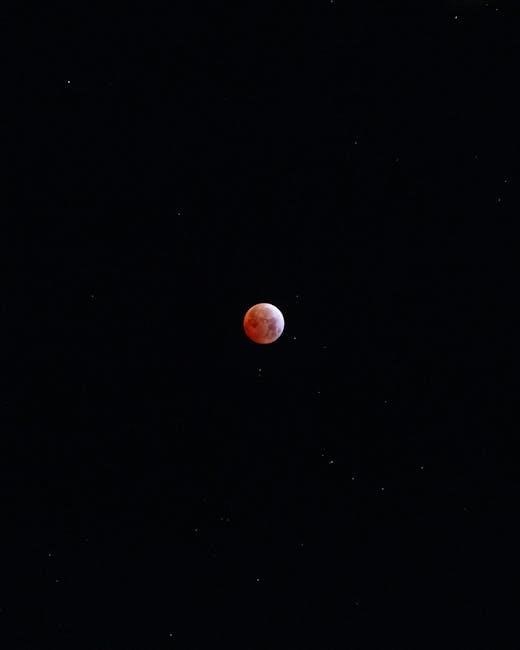
The Moon’s dance with Earth during a lunar eclipse subtly influences our planet, impacting tides and potentially stirring changes in animal behaviors.
Tidal Effects During a Lunar Eclipse
Lunar eclipses, while visually stunning, also exert a subtle influence on Earth’s tides. Typically, the strongest tides – known as spring tides – occur during new and full moons, due to the combined gravitational pull of the Sun and Moon. A lunar eclipse happens during the full moon phase, meaning spring tides are already in effect.
However, the alignment during an eclipse isn’t perfectly straight. The Earth positions itself between the Sun and Moon, slightly diminishing the combined gravitational force. This results in a minor reduction in tidal range compared to a typical full moon spring tide; The difference isn’t dramatically noticeable to the casual observer, but precise measurements can detect the subtle shift.
Furthermore, the eclipse’s duration doesn’t significantly alter tidal patterns; the effect is primarily related to the alignment itself. Coastal areas will still experience higher-than-average tides, but perhaps not quite as extreme as during a standard full moon.
Potential Influence on Animal Behavior
The full moon, and particularly events like a red moon lunar eclipse, have long been speculated to influence animal behavior. Many nocturnal animals rely heavily on lunar light for navigation, hunting, and reproduction. A diminished, reddish lunar glow during an eclipse could disrupt these ingrained patterns.
Some studies suggest increased activity in certain species during full moons, while others show a decrease. An eclipse might amplify these effects, causing confusion or altered routines. Coral reefs, for example, exhibit synchronized spawning events often triggered by the full moon; an eclipse could potentially delay or disrupt this process.
However, definitive scientific evidence remains limited. Observed changes could also be attributed to other environmental factors. Further research is needed to fully understand the extent to which lunar eclipses impact the animal kingdom.
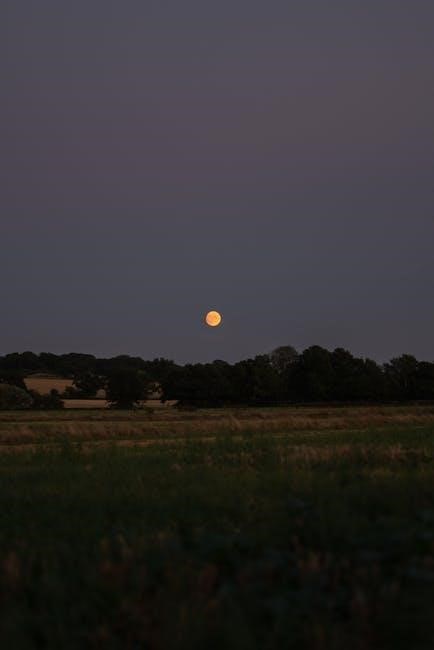
Future Red Moon Events
Mark your calendars! Upcoming total lunar eclipses offering similar “red moon” views will occur on March 14, 2025, and again on September 8, 2026.
Upcoming Total Lunar Eclipses
Beyond the captivating Red Moon of September 7, 2026, astronomy enthusiasts have several future total lunar eclipses to anticipate. These events, where the Moon passes entirely into Earth’s umbra, offer similar opportunities to witness the reddish lunar glow.
On March 14, 2025, a total lunar eclipse will be visible across North and South America, offering a spectacular show for observers in those regions. Following the September 2026 event, another total lunar eclipse is predicted for September 8, 2026, providing a second chance within a short timeframe to experience this phenomenon.
Further ahead, eclipses are scheduled for February 20, 2027, and January 15, 2028, though visibility will vary depending on geographical location. Each eclipse presents a unique opportunity to study the interaction of sunlight with Earth’s atmosphere and the Moon’s surface, creating a mesmerizing celestial display.



0 Comments