2015 Subaru Forester Owner’s Manual: A Comprehensive Guide
This detailed manual streamlines the setup and operation of your 2015 Subaru Forester‚ offering essential instructions and helpful visuals for all owners․
Welcome to the world of Subaru and your new 2015 Forester! This vehicle represents a commitment to safety‚ reliability‚ and adventure․ This section serves as your initial guide‚ providing a foundational understanding of your Forester’s capabilities and features․
Before you embark on your journeys‚ take the time to familiarize yourself with this owner’s manual․ It’s designed to simplify the process of understanding and utilizing all that your Forester has to offer․ We’ve included clear instructions and illustrative diagrams to ensure a smooth and enjoyable ownership experience․
This manual will walk you through everything from basic operation to advanced features‚ helping you maximize your driving pleasure and maintain your vehicle in optimal condition․ Remember‚ a well-maintained Forester is a happy Forester!
Understanding Your Vehicle – Key Features
The 2015 Subaru Forester boasts a range of impressive features designed for both comfort and capability․ Key highlights include Subaru’s renowned Symmetrical All-Wheel Drive‚ providing superior traction in various conditions․ The spacious interior offers ample room for passengers and cargo‚ making it ideal for families and adventurers alike․
You’ll appreciate the Forester’s standard features like a rearview camera‚ Bluetooth connectivity‚ and a user-friendly infotainment system․ Higher trims offer even more luxuries‚ such as a power moonroof‚ leather upholstery‚ and advanced safety technologies․
This section will delve into these features‚ explaining their operation and benefits․ Understanding these key aspects of your Forester will enhance your driving experience and allow you to fully appreciate its versatility and innovation․

Safety Features & Operation
Your 2015 Forester prioritizes occupant protection with advanced systems‚ including strategically placed airbags‚ robust seatbelts‚ and electronic stability control for confident driving․
Seatbelts & Child Restraints
Proper seatbelt usage is crucial for all occupants in your 2015 Forester․ Always ensure seatbelts are correctly fastened and adjusted for a secure fit‚ minimizing the risk of injury during a collision․ The Forester features three-point seatbelts in all seating positions․
Child restraints are essential for protecting young passengers․ Refer to your local laws and the child restraint manufacturer’s instructions for proper installation and usage․ The Forester is equipped with LATCH (Lower Anchors and Tethers for CHildren) systems in the rear outboard seating positions for simplified child seat installation․
Never place a rear-facing infant seat in the front passenger seat if the vehicle is equipped with an active front airbag․ Always prioritize safety and follow recommended guidelines for child passenger safety․ Regularly inspect seatbelts and child restraints for any signs of damage or wear․
Airbag System – Details & Precautions
Your 2015 Forester is equipped with a sophisticated airbag system designed to supplement seatbelt protection in certain collision scenarios․ This system includes front airbags for the driver and passenger‚ as well as side curtain airbags protecting front and rear occupants․
It’s vital to understand airbag operation and precautions․ Airbags deploy with significant force and can cause injury if occupants are not properly positioned․ Always wear your seatbelt‚ and ensure passengers do the same․ Never place objects between occupants and the airbags․
Certain conditions can affect airbag deployment․ Factors like collision severity and seat occupancy are considered․ Regularly inspect the airbag system for any warning lights‚ and have any issues addressed by a qualified technician․ Improper modifications can disable the system․
Vehicle Stability Control (VSC) System
The 2015 Forester’s Vehicle Stability Control (VSC) system is a crucial safety feature designed to help maintain control during challenging driving conditions․ VSC utilizes sensors to detect potential skids or loss of traction‚ automatically applying brakes to individual wheels and adjusting engine power․
This system works in conjunction with other safety features like Traction Control System (TCS) and Anti-lock Braking System (ABS) to enhance overall vehicle stability․ A flashing VSC warning light indicates the system is actively engaged․
While VSC is highly effective‚ it’s not a substitute for safe driving practices․ Always maintain a safe speed‚ and be mindful of road conditions․ The system can be temporarily disabled with a button‚ but it automatically re-engages upon restarting the vehicle․
Anti-lock Braking System (ABS)
The 2015 Subaru Forester is equipped with an Anti-lock Braking System (ABS)‚ a vital safety component designed to prevent wheel lock-up during hard braking․ This allows the driver to maintain steering control even in emergency stopping situations․
When ABS activates‚ you may feel a pulsing sensation in the brake pedal and hear a clicking sound – this is normal operation․ Maintain firm and continuous pressure on the brake pedal; do not pump the brakes․ The system is working to optimize braking performance․
A warning light on the dashboard will illuminate if the ABS system detects a malfunction․ If this occurs‚ your standard braking system will still function‚ but ABS assistance will be unavailable․ Regular maintenance is crucial for ensuring optimal ABS performance and reliability․

Driving Your 2015 Forester
Mastering your 2015 Forester’s driving experience involves understanding engine start-up‚ transmission operation‚ driving modes‚ and maximizing fuel efficiency for optimal performance․
Starting & Stopping the Engine
Starting your 2015 Forester is a straightforward process․ Ensure the parking brake is engaged‚ and the gear selector is in Park (P) or Neutral (N)․ Insert the key into the ignition and turn it to the “ON” position; You’ll hear the fuel pump prime․ Then‚ turn the key further to the “START” position and hold it until the engine starts – typically‚ do not crank for more than 10-15 seconds․
To stop the engine‚ simply shift the gear selector into Park (P) and turn the ignition key to the “OFF” position․ Remove the key to prevent accidental starting․ Always allow the engine to idle briefly before shutting it off‚ especially after vigorous driving‚ to allow for proper cool-down and oil circulation․ Avoid prolonged idling‚ as it can reduce fuel efficiency and increase emissions․ Remember to fully engage the parking brake before exiting the vehicle․
Automatic Transmission Operation
Your 2015 Forester’s automatic transmission offers smooth and efficient gear changes․ The gear selector positions include P (Park)‚ R (Reverse)‚ N (Neutral)‚ D (Drive)‚ and S (Sport – if equipped)․ To select a gear‚ firmly press the brake pedal and move the selector lever to the desired position․
In ‘D’ mode‚ the transmission automatically selects the optimal gear for driving conditions․ ‘S’ mode provides more responsive shifting for spirited driving․ Avoid shifting while accelerating hard․ When slowing down‚ the transmission will automatically downshift․ To manually select a gear (if equipped with manual shift mode)‚ move the lever to the “+” or “-” position․ Remember to always come to a complete stop before shifting into Park or Reverse․
Manual Transmission Operation (if applicable)
If your 2015 Forester is equipped with a manual transmission‚ smooth and coordinated operation of the clutch and gearshift lever is key․ Fully depress the clutch pedal before shifting gears․ Select the desired gear by moving the shift lever into the appropriate position – a shift pattern diagram is typically located on the shift knob․
Release the clutch pedal slowly while simultaneously applying gentle pressure to the accelerator pedal․ Avoid “riding” the clutch‚ as this can cause premature wear․ Downshifting should be done to match engine speed to road speed․ Always ensure the vehicle is at a complete stop before shifting into reverse․ Practice smooth transitions for optimal driving experience and component longevity․
Driving Modes – X-Mode Explained
The 2015 Forester’s X-Mode is a driver-selectable system designed to enhance performance in challenging driving conditions‚ such as snow‚ gravel‚ or mud․ Activated via a switch on the center console‚ X-Mode optimizes engine output‚ transmission ratios‚ and Vehicle Stability Control (VSC) settings for improved traction and control․
When engaged‚ X-Mode works in conjunction with Hill Descent Control‚ allowing for controlled descents on steep inclines․ The system automatically manages braking to maintain a consistent speed․ X-Mode is most effective at speeds below 25 mph․ Remember that X-Mode doesn’t guarantee traction in all situations; always drive cautiously and adjust speed to conditions․
Fuel Efficiency Tips & Considerations
Maximizing fuel economy in your 2015 Forester involves several driving and maintenance practices․ Maintaining proper tire inflation‚ as indicated on the tire placard‚ is crucial․ Avoid aggressive acceleration and braking‚ opting for smooth‚ consistent driving habits․ Reducing unnecessary weight in the vehicle also contributes to better mileage․
Regular maintenance‚ including air filter replacement and oil changes according to the scheduled maintenance intervals‚ is essential․ Utilizing cruise control on highways can help maintain a steady speed․ Be mindful of idling; excessive idling consumes fuel․ Consider the impact of roof racks or cargo carriers‚ as they increase aerodynamic drag and reduce fuel efficiency․

Maintenance & Care
Ensure your 2015 Forester’s longevity through diligent upkeep; follow scheduled services‚ fluid checks‚ and timely replacements for optimal performance and reliability․
Scheduled Maintenance – Intervals & Services
Maintaining your 2015 Subaru Forester requires adherence to a specific maintenance schedule‚ designed to ensure optimal performance and longevity․ Regular inspections and services are crucial for preventing costly repairs down the road․
Every 5‚000 miles (or 6 months)‚ a basic service is recommended‚ including an oil and filter change‚ tire rotation‚ and a comprehensive multi-point inspection․
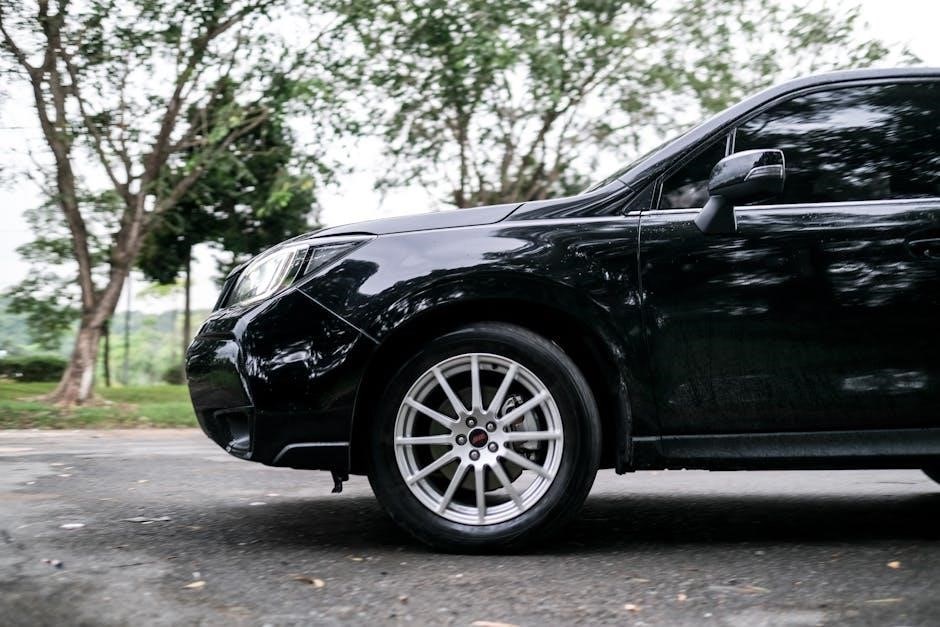
At 15‚000 miles‚ add a cabin air filter replacement to the basic service․ By 30‚000 miles‚ the engine air filter and brake fluid should also be replaced․ Every 60‚000 miles‚ a more extensive service is needed‚ encompassing spark plug replacement‚ coolant flush‚ and drive belt inspection․
Consult your 2015 Forester’s official maintenance schedule for a detailed breakdown of all recommended services and intervals‚ tailored to your driving conditions․
Oil Change Procedures & Specifications
Performing regular oil changes is vital for your 2015 Subaru Forester’s engine health․ Use only API-certified oil meeting Subaru’s specifications to avoid damage․ The recommended oil viscosity is 0W-20‚ ensuring optimal lubrication in various climates․
To change the oil‚ warm the engine slightly‚ then locate the oil drain plug underneath the vehicle․ Carefully drain the old oil into a suitable container․ Replace the oil filter with a genuine Subaru filter or a high-quality equivalent․
Reinstall the drain plug with a new crush washer‚ tightening to the specified torque․ Add 5․1 quarts (4․8 liters) of fresh 0W-20 oil․ Check the oil level using the dipstick‚ ensuring it falls between the minimum and maximum marks․ Properly dispose of the used oil and filter․
Tire Maintenance – Pressure‚ Rotation & Replacement
Maintaining proper tire care extends their lifespan and ensures optimal safety for your 2015 Subaru Forester․ Regularly check tire pressure – the recommended pressure is typically 32 PSI for most trims‚ but verify the sticker on the driver’s side doorjamb for precise values․
Rotate your tires every 5‚000 to 7‚500 miles to promote even wear․ A common rotation pattern is front to back on the same side․ Inspect tires for uneven wear‚ cuts‚ or bulges․
Replace tires when tread depth reaches 2/32 of an inch‚ indicated by the wear bars․ Use tires of the same size and type․ When replacing‚ consider Subaru-approved tires for best performance and handling characteristics․ Always balance tires after installation;
Fluid Checks – Coolant‚ Brake Fluid‚ Power Steering Fluid
Regularly inspecting your 2015 Forester’s fluids is crucial for preventing damage and ensuring reliable operation․ Check the coolant level in the reservoir when the engine is cold; it should be between the “MIN” and “MAX” lines․ Use Subaru Super Coolant to avoid corrosion․
Brake fluid levels should also be checked periodically‚ ensuring it’s within the designated range on the master cylinder․ Low brake fluid may indicate a leak․ Power steering fluid levels are found on the reservoir; top up with Subaru Genuine Power Steering Fluid if needed․
Always use the specified fluids to maintain optimal performance and avoid damaging the vehicle’s systems․ Consult a qualified technician if you notice any significant fluid loss or contamination․
Battery Maintenance & Jump Starting
Maintaining your 2015 Forester’s battery is vital for reliable starting‚ especially in extreme temperatures․ Regularly inspect the terminals for corrosion and clean them with a wire brush if necessary․ Ensure the battery is securely mounted and the connections are tight․

If your battery is discharged‚ jump-starting is possible‚ but follow the correct procedure to avoid damage․ Connect the positive (+) cable to the positive terminal of the dead battery‚ then to the good battery․ Connect the negative (-) cable to the good battery‚ then to a grounded metal part of the Forester․
Start the good vehicle‚ let it run for a few minutes‚ then attempt to start the Forester․ Disconnect the cables in reverse order after starting․ Consider a battery tender for prolonged storage․

Interior Features & Technology
Explore the advanced interior of your 2015 Forester‚ featuring an intuitive infotainment system‚ seamless Bluetooth integration‚ and a comfortable climate control experience․
Infotainment System – Navigation & Audio
The 2015 Forester’s infotainment system provides a central hub for navigation‚ audio‚ and connectivity․ Depending on the trim level‚ your vehicle may feature a 6․2-inch or 7-inch touchscreen display․ This system allows for easy access to radio stations‚ CD player functionality (if equipped)‚ and auxiliary/USB inputs for connecting external devices․
Navigation features‚ when equipped‚ offer turn-by-turn directions‚ points of interest‚ and real-time traffic updates․ Audio controls are intuitively designed for volume adjustment‚ source selection‚ and sound customization․ Bluetooth connectivity enables wireless audio streaming from smartphones and other compatible devices․ Explore the system’s menus to personalize your audio experience and discover its full range of capabilities․ Refer to the separate navigation manual for detailed instructions on map updates and advanced features․
Bluetooth Connectivity & Phone Integration
The 2015 Subaru Forester offers seamless Bluetooth connectivity for hands-free calling and wireless audio streaming․ To pair your smartphone‚ navigate to the Bluetooth settings within the infotainment system’s menu․ Ensure your phone is in discovery mode and follow the on-screen prompts to complete the pairing process․
Once connected‚ you can make and receive calls directly through the vehicle’s audio system‚ utilizing steering wheel controls for added convenience․ The system also supports audio streaming from compatible music apps on your smartphone․ Phone integration allows for access to contacts and call history․ Remember to consult your phone’s manual for specific Bluetooth compatibility information․ Maintaining a stable connection ensures optimal performance and a safer driving experience․
Climate Control System – Operation & Settings
The 2015 Forester’s climate control system provides comfortable cabin temperatures for all occupants․ Operation is straightforward‚ utilizing intuitive controls for fan speed‚ temperature adjustment‚ and airflow direction․ The system features automatic temperature control‚ allowing you to set a desired temperature and let the system maintain it․
Manual settings offer precise control over cooling and heating․ Utilize the recirculation button to quickly adjust cabin temperature‚ especially in extreme weather․ The dual-zone climate control (on select trims) allows independent temperature settings for driver and passenger․ Regularly check the cabin air filter for optimal performance․ Proper use of the climate control system enhances driving comfort and ensures a pleasant journey for everyone inside the vehicle․

Power Windows‚ Locks & Mirrors
The 2015 Forester offers convenient power-operated windows‚ door locks‚ and exterior mirrors․ Window controls are located on the driver’s door panel‚ with a master switch controlling all windows․ A one-touch up/down feature is available for added convenience․ The power door locks provide secure access‚ and a central locking system is standard․
Exterior mirrors are also power-adjustable‚ allowing for optimal visibility․ Many models include integrated turn signals in the mirrors for enhanced safety․ Familiarize yourself with the child safety lock function on the rear doors to prevent accidental opening․ Regularly test all functions to ensure proper operation․ These features contribute to the Forester’s overall ease of use and driver comfort․

Troubleshooting & Emergency Procedures
This section details vital responses to common issues and unexpected events‚ providing guidance on warning lights‚ breakdowns‚ towing‚ and basic problem-solving․
Warning Lights – Understanding the Dashboard
Your 2015 Forester’s dashboard utilizes a series of illuminated icons to communicate the vehicle’s status․ Recognizing these lights is crucial for safe operation and preventative maintenance․ A solid illumination generally indicates a current issue requiring attention‚ while a flashing light often signifies a more urgent problem․
Key warning lights include: the check engine light (potential engine malfunction)‚ the brake warning light (brake system issue or parking brake engaged)‚ the oil pressure warning light (low oil pressure – stop the vehicle immediately)‚ and the battery warning light (charging system problem)․
Other important indicators are: the airbag system warning light‚ the anti-lock braking system (ABS) light‚ and the Vehicle Dynamics Control (VDC) light․ Refer to the dedicated section in this manual for detailed explanations of each light and recommended actions․ Ignoring warning lights can lead to more significant damage or compromise safety․
What to Do in an Emergency – Breakdown Assistance
Should your 2015 Forester experience a breakdown‚ prioritize safety first․ Pull over to a safe location‚ away from traffic‚ and activate your hazard lights․ Assess the situation – is it a minor issue you can address‚ or do you require professional assistance?
Subaru offers roadside assistance services for eligible vehicles․ Contact Subaru’s dedicated support line for towing‚ jump starts‚ tire changes‚ and fuel delivery․ Keep your vehicle identification number (VIN) and policy information readily available․

If you choose independent towing‚ ensure the service provider is reputable and equipped to handle your Forester․ Avoid attempting complex repairs yourself unless you possess the necessary skills and tools․ Always follow local laws and regulations regarding roadside emergencies․ Your safety and the safety of others are paramount․
Towing Procedures & Specifications
When towing your 2015 Forester‚ proper procedures are crucial to prevent damage․ Utilize approved towing equipment – a tow dolly or a flatbed trailer are recommended․ Avoid towing with the front wheels on the ground for extended distances‚ as this can strain the drivetrain․
The maximum towing capacity for most 2015 Forester models is 1‚500 lbs (680 kg)‚ but verify your specific vehicle’s capacity on the doorjamb sticker or in your owner’s manual․ Ensure the trailer has functioning brakes and appropriate lighting․
Secure the Forester firmly to the towing equipment using appropriate straps or chains․ Disconnect the vehicle’s driveshaft if towing long distances with the front wheels lifted․ Always adhere to local towing regulations and speed limits․
Basic Troubleshooting – Common Issues & Solutions
Experiencing minor issues with your 2015 Forester? A quick check of the battery connections can resolve starting problems․ If the engine won’t start‚ verify fuel levels and check for any warning lights illuminated on the dashboard․ A loose gas cap can trigger the check engine light – ensure it’s tightened properly․
For issues with the infotainment system‚ try a simple reset by turning the vehicle off and on․ If a tire pressure warning appears‚ check and inflate tires to the recommended pressure listed on the driver’s side doorjamb․
Remember to consult a qualified mechanic for complex problems․ Ignoring warning signs can lead to more significant and costly repairs․ Regular maintenance‚ as outlined in this manual‚ can prevent many common issues․



0 Comments